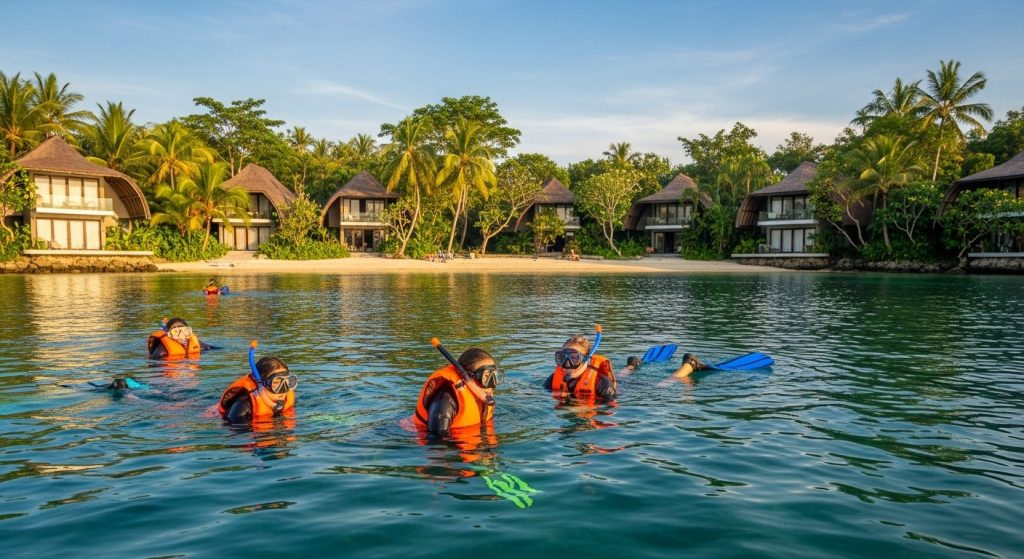
For those drawn to the ocean’s depths and vibrant life, a bali marine eco tour snorkel experience offers a profound connection to Bali’s underwater world. We meticulously vet operators to ensure your exploration of Bali’s coral reefs and marine sanctuaries is genuinely low-impact and supports local conservation efforts.
Our commitment at Verda Bali is to guide you towards experiences that not only captivate but also contribute positively to the environment. This means distinguishing between an authentic conservation engagement and a mere photo opportunity. We focus on partners who uphold rigorous ethical wildlife practices, ensuring that your marine adventure respects the delicate ecosystems it explores.
What Defines a Reef-Safe Marine Eco-Tour in Bali?
The term “reef-safe” extends beyond sunscreen. It encompasses a holistic approach to marine interaction, ensuring minimal disruption to the delicate ecosystems. When we evaluate bali diving eco-responsible operators and snorkel tour providers, we look for concrete actions that demonstrate a long-term commitment to ocean health. This includes everything from the equipment used to the educational component of the tour.
Identifying Eco-Responsible Operators
A genuinely eco-responsible operator prioritizes education, conservation, and community benefit. They typically employ licensed local guides who are not only knowledgeable about marine life but also trained in low-impact guiding techniques. These operators actively participate in or support local conservation initiatives, such as coral reef restoration bali tours or sea turtle rehabilitation programs. They avoid practices that can harm marine life, such as feeding fish, touching coral, or chasing animals. Transparency about their operational footprint and a clear code of conduct for guests are hallmarks of their dedication.
Understanding Low-Impact Practices
Low-impact marine practices are fundamental to preserving Bali’s biodiverse waters. This involves small group sizes to minimize disturbance, the use of moorings instead of anchoring on reefs, and strict adherence to no-touch policies for all marine life. Operators should provide clear briefings on marine etiquette, including proper finning techniques for snorkelers and divers to avoid kicking up sediment or damaging corals. Waste management, including responsible disposal of trash and avoidance of single-use plastics, is also a critical component. For us, a true reef-safe operator empowers guests to become stewards of the ocean, not just observers.
- Verda Bali’s Reef-Safe Operator Criteria:
-
- Licensed & Local Guides: Expertise in marine biology, local ecology, and responsible guiding.
- Small Group Sizes: Minimized environmental impact and enhanced personal experience.
- No-Touch Policy: Strict adherence to observing marine life without physical interaction.
- Moorings & Anchor-Free: Use of designated moorings to protect coral structures.
- Waste Management: Zero single-use plastics, proper waste collection, and disposal.
- Conservation Contributions: Direct involvement or financial support for local marine conservation projects, including coral reef restoration bali tours.
- Guest Education: Comprehensive briefings on marine etiquette, species identification, and environmental awareness.
- Equipment Check: Ensuring gear is in good condition to prevent accidental damage to reefs.
- Reef-Safe Sunscreen Policy: Encouraging or providing mineral-based sun protection.
- Community Engagement: Fair wages and opportunities for local communities.
Explore Bali’s Premier Marine Sanctuaries & Dive Sites
Bali offers an extraordinary array of marine environments, from vibrant coral gardens to historic wrecks and dynamic muck diving sites. Our focus is on areas that not only provide spectacular experiences but are also committed to long-term marine protection. These bali marine sanctuaries tourism destinations are carefully managed to balance visitor access with ecological preservation.
Amed: Sustainable Diving & Coral Reef Restoration Bali Tours
Amed, located on Bali’s east coast, is synonymous with serene village life and some of the island’s most accessible and sustainable diving. The calm waters here are home to an impressive range of soft and hard corals, thriving fish populations, and a significant number of ongoing coral reef restoration bali tours. Divers and snorkelers can witness firsthand the dedication of local communities and conservationists working to rebuild and protect these vital ecosystems.
The area is known for its macro life, healthy reefs, and gentle currents, making it ideal for all skill levels. Many dive centers in Amed are pioneers in eco-responsible practices, offering opportunities to participate in coral planting or learn about reef rehabilitation. It’s an ideal location for those seeking a bali snorkel tour coral reef experience that educates and inspires. Beyond the reefs, Amed’s black sand beaches and views of Mount Agung create a tranquil backdrop for your marine adventures. Experiences here often integrate local cultural elements, providing a holistic understanding of Bali’s coastal communities and their connection to the sea.
Menjangan Island, West Bali National Park: Reef-Safe Snorkeling
Off the northwest coast, within the boundaries of the West Bali National Park (Taman Nasional Bali Barat), lies Menjangan Island. This protected area is renowned for its exceptional water clarity, dramatic drop-offs, and some of Bali’s most pristine coral reefs. Menjangan Island West Bali National Park snorkeling is a truly special experience, offering encounters with an abundance of reef fish, sea turtles, and occasional reef sharks.
Access to Menjangan is strictly controlled by the national park authorities, which helps maintain its ecological integrity. Tour operators here are typically licensed by the park and adhere to stringent environmental guidelines. Snorkeling and diving activities are conducted from boats, with guides ensuring no contact with the delicate coral structures. The island itself is uninhabited by humans, serving as a sanctuary for deer (menjangan in Indonesian) that often come down to the beaches. This remoteness and protection contribute to the vibrant health of its marine life, making it a prime location for reef-safe snorkeling Nusa Penida standards of excellence applied to a different, equally magnificent area.
Nusa Penida: Reef-Safe Snorkeling & Conservation Focus
Southeast of mainland Bali, the Nusa Islands—Penida, Lembongan, and Ceningan—offer exhilarating marine encounters. Nusa Penida, in particular, has become a global hotspot for its dramatic underwater topography and large pelagic species. While famous for manta rays at Manta Point and Mola Mola (ocean sunfish) sightings in season, it’s crucial to choose operators committed to reef-safe snorkeling Nusa Penida practices.
The sheer volume of visitors to Nusa Penida necessitates careful selection of tour providers. Verda Bali partners with operators who prioritize responsible viewing protocols for manta rays and other megafauna, ensuring minimal disturbance to these magnificent creatures. They also focus on protecting the expansive coral gardens that thrive in the strong currents around the islands. Many local initiatives on Nusa Penida are working to educate both tourists and local communities on the importance of marine conservation, making it a powerful destination for those interested in active marine protection alongside their snorkel tour coral reef exploration.
Tulamben: Muck Dive Eco Tour & Wreck Exploration
Tulamben, also on Bali’s east coast, offers a unique marine experience centered around the USAT Liberty shipwreck. This easily accessible wreck, lying just meters from the shore, is a vibrant artificial reef teeming with life. While the wreck itself is a major draw for divers, Tulamben also excels as a premier destination for a tulamben muck dive eco tour.
Muck diving involves exploring sandy or silty seabeds, where a fascinating array of cryptic and unusual creatures reside. From various species of frogfish and ghost pipefish to nudibranchs and octopuses, the biodiversity found in Tulamben’s “muck” is astounding. Eco-responsible operators here focus on guiding divers to observe these creatures without disturbing their habitats. They emphasize buoyancy control and no-touch policies, crucial for protecting the delicate and often camouflaged inhabitants of the sandy slopes. Combining a visit to the Liberty wreck with a guided muck dive provides a comprehensive and compelling marine eco tour in Bali.
Beyond Snorkeling & Diving: Unique Bali Marine Experiences
Bali’s marine offerings extend beyond traditional diving and snorkeling, providing diverse ways to engage with the ocean responsibly. These experiences cater to different interests, all while upholding the principles of low-impact tourism.
Bali Sunset Sailing Eco Tour
Imagine the sky ablaze with hues of orange and purple as you glide silently across the water, the sounds of the ocean your only companion. A bali sunset sailing eco tour offers this tranquil experience without the noise and pollution of motorized vessels. These tours typically utilize traditional Indonesian sailing vessels or modern catamarans designed for minimal environmental impact.
Operators for these eco-tours focus on showcasing the beauty of Bali’s coastline from a unique perspective, often highlighting marine conservation efforts and coastal ecology during the journey. The experience is about appreciating the natural environment, enjoying fresh, locally sourced refreshments, and connecting with the sea in a peaceful manner. It’s a refined way to conclude a day of exploration, offering a quiet luxury that aligns perfectly with Verda Bali’s ethos.
Bali Sea Turtle Conservation Diving Experience
For those who wish to contribute directly to marine life protection, a bali sea turtle conservation diving experience offers a deeply rewarding opportunity. Several initiatives across Bali are dedicated to rehabilitating injured sea turtles and protecting nesting sites. Partnering with conservation-minded dive operators allows guests to participate in supervised activities that support these efforts.
This might include observing rescued turtles at a rehabilitation center, learning about their biology and the threats they face, or even participating in reef clean-ups that directly benefit turtle habitats. While direct interaction with wild turtles is always discouraged and strictly observational during dives, these programs provide a profound understanding of their plight and the ongoing work to ensure their survival. Such experiences deepen appreciation for marine biodiversity and foster a sense of stewardship.
Bali Mangrove Canoeing Conservation Tour Guide
The coastal mangroves of Bali, particularly in areas like Sanur and Benoa, are critical nurseries for marine life and natural barriers against coastal erosion. A bali mangrove canoeing conservation tour guide can lead you through these intricate waterways, offering a unique perspective on a vital ecosystem often overlooked by beach-focused tourism.
Paddling through the quiet channels allows for close observation of juvenile fish, crabs, and various bird species that rely on the mangroves for shelter and food. These tours are inherently low-impact, using human-powered canoes that cause no noise pollution or disturbance. Guides typically provide educational commentary on the ecological importance of mangroves, the challenges they face, and local conservation efforts. It’s an immersive and peaceful way to connect with a different facet of Bali’s natural heritage, supporting local communities involved in mangrove protection.
Bali Diving Certification Eco Resort: Learning Responsibly
For aspiring divers, choosing a bali diving certification eco resort ensures your entry into the underwater world is grounded in responsible practices from the outset. These resorts and dive centers integrate environmental education into their PADI or SSI certification programs, teaching not just dive skills but also marine conservation principles.
Such facilities often have their own reef restoration projects, sustainable waste management systems, and employ local marine biologists as instructors. Learning to dive in an environment that champions eco-consciousness means you’ll develop good habits early on, understanding proper buoyancy control, no-touch rules, and how to identify and protect local marine species. These resorts often offer comfortable accommodations and thoughtful amenities, blending luxury with genuine commitment to the environment, making the learning process both enjoyable and impactful.
Planning Your Marine Eco-Tour: Practical Considerations
Thoughtful planning ensures your marine eco-tour aligns with your values and provides the best possible experience. Understanding the logistics, costs, and seasonal variations will help you make informed choices.
Marine Eco Tour Bali Per Person Cost: An Honest Range
The cost of a marine eco tour in Bali varies significantly based on the activity, duration, location, operator’s commitment to eco-standards, and inclusions. Verda Bali provides indicative pricing based on our last verification in June 2026, understanding that these are ranges and subject to change. Higher prices often reflect smaller group sizes, higher guide-to-guest ratios, superior equipment, and direct contributions to conservation projects.
* **Snorkeling Tours (Half-day to Full-day):** IDR 500,000 – 1,500,000 per person. This typically includes equipment, guide, boat transfer, and sometimes a simple meal. For reef-safe snorkeling Nusa Penida or Menjangan, expect costs towards the higher end due to park fees and specialized guides.
* **Discover Scuba Diving (Introductory Dive):** IDR 1,200,000 – 2,500,000 per person. Includes equipment, instruction, and usually two dives.
* **Certified Diving (Fun Dives, 2-3 dives):** IDR 1,000,000 – 2,000,000 per person. Includes tanks, weights, guide, boat, and sometimes lunch. Excludes full equipment rental (approx. IDR 200,000 – 300,000 extra).
* **Diving Certification (e.g., Open Water Course):** IDR 4,500,000 – 7,500,000 per person. Includes theory, confined water, and open water dives, equipment, and certification fees. A bali diving certification eco resort may be at the higher end of this range.
* **Bali Sunset Sailing Eco Tour:** IDR 800,000 – 2,000,000 per person. Includes refreshments and sometimes light dinner.
* **Bali Mangrove Canoeing Conservation Tour Guide:** IDR 300,000 – 700,000 per person. Includes guide and canoe rental.
* **Coral Reef Restoration Bali Tours / Sea Turtle Conservation (specialized experiences):** Can range from IDR 1,000,000 for a guided activity to higher for multi-day volunteer programs.
These prices are for guidance. Verda Bali routes inquiries to vetted partners who provide transparent, confirmed pricing directly.
Best Time Marine Eco Tour Bali: Seasonality and Conditions
The best time marine eco tour bali depends largely on the activity and location. Bali generally has two main seasons: the dry season (April to October) and the wet season (November to March).
* **Dry Season (April – October):** This is generally considered the prime time for marine activities across Bali. Visibility is typically at its best, especially around Nusa Penida for manta rays and Mola Mola (June to October). Water conditions are calmer, particularly on the south and west coasts. This period is ideal for reef-safe snorkeling Nusa Penida, Menjangan Island West Bali National Park snorkeling, and general bali snorkel tour coral reef exploration.
* **Wet Season (November – March):** While rain is more frequent, it often comes in short, heavy bursts, and days can still be sunny. Water temperatures remain warm. Visibility can be reduced in some areas, particularly near river mouths due to runoff. However, areas like Amed and Tulamben, on the east coast, are often less affected by the wet season currents and can still offer excellent diving, including tulamben muck dive eco tour opportunities.
It’s important to note that weather patterns can be unpredictable, and local conditions can vary. Our partners provide up-to-date information on sea conditions closer to your travel dates.
Preparing for Your Low-Impact Adventure
To ensure your marine eco tour is as low-impact as possible, a few preparations are key:
* **Reef-Safe Sunscreen:** Use mineral-based sunscreens (zinc oxide or titanium dioxide) that do not contain oxybenzone or octinoxate, which are harmful to coral.
* **Reusable Water Bottle:** Avoid single-use plastics by bringing your own bottle. Many operators provide water refills.
* **Appropriate Attire:** Light, quick-drying clothing is suitable. A rash guard can provide sun protection while snorkeling or diving, reducing the need for excessive sunscreen.
* **Respectful Interaction:** Always listen to your guide’s instructions. Maintain a respectful distance from all marine life, never touch or chase animals, and avoid stepping on or kicking corals.
* **Minimal Waste:** Carry out everything you bring in.
* **Buoyancy Control:** If diving, practice good buoyancy control to avoid accidental contact with the reef.
Consider engaging with a bali marine eco tour snorkel experience that aligns with your values. Verda Bali carefully selects partners who share our dedication to protecting Bali’s extraordinary marine environments. We are here to help you navigate these options, ensuring your journey is both memorable and meaningful.
Plan your trip with Verda Bali today. Our team is ready to connect you with vetted operators and guides who uphold the highest standards of marine conservation. We can also assist with custom itineraries and answer any questions via WhatsApp.
No one can pay to change what we publish; if you proceed with our partner they may pay us a referral fee at no extra cost to you.
Frequently Asked Questions
What is the difference between a regular marine tour and an eco-tour?
An eco-tour is specifically designed to minimize environmental impact and promote conservation. It typically involves small group sizes, licensed guides trained in responsible interaction, strict no-touch policies for marine life, use of reef-safe practices (like moorings instead of anchors), and a strong educational component on marine ecology and local conservation efforts. Regular tours may not prioritize these aspects, potentially leading to higher environmental impact.
Can I participate in coral reef restoration bali tours as a beginner?
Yes, many coral reef restoration bali tours and activities are accessible to beginners, including snorkelers. These often involve guided educational sessions, observing restoration sites, or participating in supervised, non-diving activities like collecting marine debris. For direct involvement in coral planting or more complex restoration tasks, a diving certification may be required, but there are always ways to contribute regardless of your experience level.
Is it possible to see manta rays or Mola Mola on a bali marine eco tour?
Yes, destinations like Nusa Penida are renowned for manta ray sightings year-round and Mola Mola (ocean sunfish) during specific seasons (typically June to October). While sightings are never guaranteed due to the unpredictable nature of wildlife, choosing a reputable operator for reef-safe snorkeling Nusa Penida increases your chances and ensures that any encounters are conducted ethically, without disturbing the animals.
What should I pack for a marine eco tour in Bali?
Beyond your personal essentials, we recommend packing reef-safe sunscreen (mineral-based), a reusable water bottle, a wide-brimmed hat, sunglasses, a rash guard for sun protection, and a quick-drying towel. If you’re diving, consider bringing your own mask and dive computer if you prefer. Light, comfortable clothing is ideal. Your chosen operator will confirm specific gear provided.
How does Verda Bali ensure operators are genuinely eco-responsible?
Verda Bali conducts thorough vetting processes that include reviewing operator certifications, interviewing guides, assessing their operational practices (e.g., waste management, group sizes, use of moorings), verifying their involvement in local conservation projects, and gathering feedback. We look for transparency, consistent adherence to low-impact guidelines, and a genuine commitment to marine protection that goes beyond marketing claims.
Your journey into Bali’s vibrant marine world awaits, guided by integrity and a deep respect for nature.
Plan your trip with us today. We’re available via WhatsApp to help tailor your ideal marine eco-adventure.