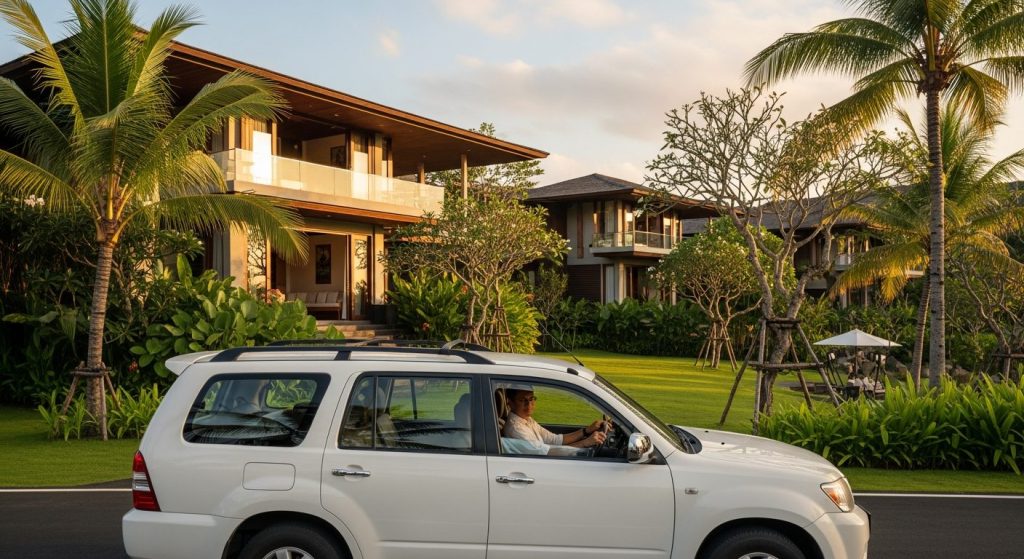
A **carbon conscious private transfer Bali** offers a mindful approach to island, pairing convenience with environmental consideration. At Verda Bali, we understand that discerning travellers seek not only comfort but also alignment with their values, making the choice of how you move around the island a significant part of your journey. Our focus is on providing transparent information and connecting you to vetted local partners who facilitate sustainable Bali transfer service options, from electric vehicles to thoughtfully offset journeys, ensuring your trip supports both the environment and local communities.
We believe in honest, independent editorial. While we share detailed information and insights, please understand this is for informational purposes only and does not constitute licensed advice. If you choose to proceed with one of our recommended partners for your travel arrangements, they may pay us a referral fee, at no extra cost to you.
Understanding Carbon-Conscious Travel in Bali
Bali, with its vibrant culture, diverse landscapes, and burgeoning eco-tourism initiatives, presents a unique opportunity for travellers to engage responsibly. Carbon-conscious travel here extends beyond simply reducing emissions; it encompasses supporting local economies, respecting cultural integrity, and preserving the island’s natural beauty. For many, this journey begins with transportation.
The concept of a private eco transfer Bali rate reflects a growing demand for services that minimise environmental impact. It acknowledges that while air travel to Bali contributes significantly to a trip’s carbon footprint, ground transportation choices on the island itself offer tangible ways to mitigate further impact. This involves selecting vehicles with lower emissions, exploring alternative transport modes, and understanding the role of carbon offsetting.
What “Carbon-Conscious” Realistically Means on the Island Today
In Bali, achieving a truly “carbon-neutral” journey can be complex due to evolving infrastructure. Our approach at Verda Bali is practical and grounded. We focus on “carbon-conscious” choices – actions that actively reduce or mitigate emissions where possible. This means prioritising electric or hybrid vehicles, supporting local initiatives that absorb carbon, and integrating slow travel principles. It’s about making the best possible choices within the current framework, rather than chasing an often elusive “zero emissions” claim.
Verda Bali’s curated selection of sustainable transportation Bali tips and partners focuses on realistic, impactful options. We aim to empower you with the knowledge to make choices that genuinely contribute to a more sustainable tourism ecosystem without exaggerated claims or greenwashing.
Electric & Hybrid Private Transfers: The Core of Sustainable Bali Transport
The availability of electric vehicle transfer Bali airport services and inter-island private transfers is a positive development for eco-minded travellers. While still a developing sector, the infrastructure for EVs and hybrids is expanding, offering viable alternatives to conventional petrol cars for many common routes.
The Rise of Electric Vehicles (EVs) in Bali
Bali has seen a gradual increase in electric vehicles, particularly for private transfers and ride-sharing services. This shift is supported by government initiatives and a growing number of charging stations, albeit primarily concentrated in popular tourist areas and major towns. Opting for an EV for your transfer significantly reduces tailpipe emissions, contributing directly to cleaner air and a quieter journey.
Our vetted partners include operators who have invested in a fleet of electric vehicles, offering an eco friendly transport Bali solution for those prioritising direct emission reduction. These vehicles typically include compact electric cars suitable for individuals or couples, as well as larger electric vans for families or groups, depending on availability.
Hybrid Vehicles: A Practical Bridge
For routes where EV charging infrastructure might be less robust or for longer distances, hybrid vehicles offer an excellent compromise. Hybrids combine a petrol engine with an electric motor, automatically switching between the two or using them in tandem to optimise fuel efficiency and reduce emissions. They are more widely available than pure EVs in Bali currently and offer a reliable option for a lower-carbon footprint.
Verda Bali works with partners who maintain modern hybrid fleets, ensuring you have access to a more sustainable choice even when a full EV might not be practical for your specific itinerary. This flexibility allows for a broader application of carbon-conscious principles across various Bali travel scenarios.
EV/Hybrid vs. Standard Petrol Transfers: A Comparison
Choosing between vehicle types involves understanding their respective benefits. Here’s a brief comparison to help inform your decision:
- Electric Vehicle (EV) Transfer
-
- Emissions: Zero tailpipe emissions. Overall carbon footprint depends on electricity source (increasingly renewable in Bali).
- Noise: Very quiet, enhancing a serene travel experience.
- Availability: Growing, primarily for popular routes (e.g., Denpasar Airport to Ubud, Seminyak, Canggu). Less common for remote areas.
- Cost: Can be slightly higher than standard petrol due to vehicle investment and charging infrastructure costs, but competitive for premium service.
- Benefit: Direct reduction of local air pollution and noise.
- Hybrid Vehicle Transfer
-
- Emissions: Significantly lower tailpipe emissions than standard petrol, especially in stop-and-go traffic.
- Noise: Quieter than petrol cars at low speeds, with engine assistance for acceleration.
- Availability: More widespread than EVs, offering good coverage across the island.
- Cost: Often comparable to or slightly higher than standard petrol, reflecting fuel efficiency benefits.
- Benefit: Practical emission reduction and fuel efficiency, good for varied terrain and longer distances.
- Standard Petrol Vehicle Transfer
-
- Emissions: Higher tailpipe emissions, contributing to air pollution and carbon footprint.
- Noise: Standard engine noise.
- Availability: Universal across Bali, readily available for all routes.
- Cost: Generally the most economical option.
- Benefit: Widest availability, lowest direct cost.
Carbon Offset Options: A Thoughtful Complement to Reduced Emissions
While choosing an EV or hybrid directly reduces emissions, sometimes a lower-emission vehicle isn’t feasible for every leg of a journey, or travellers wish to go further. This is where carbon offset Bali travel package options become relevant. It’s crucial, however, to approach offsets with transparency and a clear understanding of their role.
What Are Carbon Offsets, and How Do They Work in Bali?
Carbon offsets are investments in projects designed to reduce or remove greenhouse gas emissions from the atmosphere. These projects can include reforestation, renewable energy development, energy efficiency improvements, or waste management initiatives. When you purchase a carbon offset, you are essentially funding a project that will prevent or remove a certain amount of carbon dioxide equivalent (CO2e) from the atmosphere, theoretically balancing out your own emissions.
In Bali, several credible local initiatives focus on environmental restoration and community empowerment. These might include:
- Reforestation efforts: Planting trees in degraded areas, particularly in central highlands or coastal zones affected by erosion.
- Mangrove restoration: Vital for coastal protection and carbon sequestration, especially in areas like the Sanur or Benoa Bay regions.
- Clean cooking stove projects: Introducing efficient stoves in rural communities, reducing reliance on firewood and lowering indoor air pollution.
- Waste management and recycling initiatives: Supporting local efforts to process waste more sustainably, reducing landfill emissions.
Verda Bali can connect you with partners who offer transparent carbon offset schemes, often partnering directly with reputable local NGOs and environmental groups. Our aim is to provide information on how you can choose to contribute, rather than offering a “carbon-neutral guarantee,” as accurate, real-time emissions audits for individual trips are complex and often impractical.
Offsets as a Complement, Not a License to Pollute
It is important to view carbon offsets as a complement to, not a substitute for, direct emission reduction efforts. They are most effective when combined with choices like selecting an electric vehicle transfer Bali airport service or embracing slow travel principles. Offsets should not be seen as a “license to pollute,” but rather as a mechanism to support broader environmental efforts and mitigate unavoidable emissions.
We avoid any language that implies a “carbon-neutral guarantee” for your entire trip, as this can be misleading without rigorous, independent certification of every aspect of travel. Instead, we provide information on how you can thoughtfully contribute to genuine environmental projects in Bali, making your journey more responsible.
Beyond Private Vehicles: Slow Travel & Low-Emission Routing in Bali
While private transfers offer comfort and flexibility, true carbon-conscious travel often embraces a broader spectrum of transportation, particularly for shorter distances and experiential journeys. A Bali slow travel guide encourages deeper immersion and often involves lower-emission modes.
Embracing Bicycle Tours Bali Rice Terraces
For exploring specific regions, especially the iconic rice terraces around Ubud, Jatiluwih, or Sidemen, cycling is an exceptional low-impact option. A bicycle tour Bali rice terraces not only provides a zero-emission way to move but also offers an intimate connection with the landscape and local life. You can often arrange for your main luggage to be transferred by car to your next accommodation while you enjoy a day of cycling.
Many of our vetted partners offer guided cycling tours that incorporate segments of travel between villages or points of interest. This allows for a blend of efficient private transfers for longer distances and immersive, low-carbon exploration for shorter, scenic routes.
Walking and Local Exploration
For short distances within villages or towns, walking is always the most carbon-friendly option. It’s also the best way to truly experience local life, stumble upon hidden temples, or interact with residents. Many of Bali’s most charming areas, like the lanes of Ubud or the coastal paths of Sanur, are best explored on foot.
The Reality of Public Transport & Other Options
Bali’s public transport infrastructure is still developing and does not yet offer comprehensive, island-wide coverage suitable for most tourists’ itineraries. While local bemo (minibus) services exist, they can be infrequent, slow, and challenging to navigate without local language skills.
Motorbikes are ubiquitous, offering flexibility, but they come with significant safety concerns for inexperienced riders and contribute to local air pollution. We do not generally recommend motorbikes as a primary mode of tourist transport due to safety risks and environmental impact, unless part of a specific, professionally guided tour where safety protocols are stringent.
Future Considerations: Rail and Sustainable Infrastructure
Discussions around future rail segments or other advanced sustainable transportation Bali tips continue, but as of now, these remain in the planning or conceptual stages. Verda Bali keeps a close watch on infrastructure developments that could further enhance low-emission travel options for our guests.
Planning Your Eco-Friendly Bali Airport Transfer & Beyond
Organising your travel logistics with an eco-conscious mindset requires careful planning. Verda Bali acts as your eco-friendly Bali airport transfer concierge, simplifying the process of connecting with trusted, sustainable partners.
How Verda Bali Curates and Connects
Our approach is meticulous. We vet potential partners based on a range of criteria beyond just vehicle type:
- Commitment to sustainability: Do they actively seek to reduce their own operational footprint?
- Vehicle maintenance: Are their vehicles, especially EVs and hybrids, well-maintained and regularly serviced?
- Driver professionalism & local knowledge: Are drivers trained, courteous, and knowledgeable about local culture and routes?
- Fair labour practices: Do they provide fair wages and working conditions for their employees?
- Transparency: Are they clear about their environmental claims and practices?
Once vetted, we route your enquiry to the most suitable partners based on your specific needs and preferences. This ensures you receive tailored options for your carbon conscious private transfer Bali.
What to Expect for Private Eco Transfer Bali Rate Ranges
The cost for a private eco transfer Bali rate can vary based on several factors:
- Vehicle type: EVs and hybrids may be at the higher end of the spectrum due to initial investment and maintenance.
- Distance: Longer transfers (e.g., Denpasar Airport to Munduk or Candidasa) will naturally cost more than shorter ones (e.g., Airport to Seminyak).
- Time of day: Surcharges may apply for late-night or early-morning transfers.
- Additional services: Stops along the way, professional guides, or specific amenities can influence the price.
As of our last verification in June 2026, you can expect the following *ranges* for a private, one-way transfer in a standard-sized EV or hybrid vehicle for common routes:
- Denpasar Airport to Seminyak/Canggu: IDR 300,000 – 450,000
- Denpasar Airport to Ubud: IDR 450,000 – 650,000
- Denpasar Airport to Munduk/Lovina: IDR 700,000 – 1,000,000
- Denpasar Airport to Amed/Candidasa: IDR 600,000 – 900,000
These figures are illustrative and subject to change. They serve as a guide to help you budget for your sustainable Bali transfer service.
The Verda Bali Approach: Honest Curatorial for Carbon-Conscious Luxury Travel
Verda Bali stands as an independent, honesty-first editorial and concierge. Our mission is to demystify sustainable travel in Bali, providing clarity and actionable options for those who seek both luxury and responsibility. Our focus on carbon conscious luxury travel Bali means we believe that a refined experience doesn’t have to come at the expense of the environment or local communities.
We do not accept payment to alter our editorial content or recommendations. Our independence ensures that the information we provide is unbiased and genuinely serves your best interests. If you choose to book services through one of our vetted partners, they may pay us a referral fee, which comes at no additional cost to you. This model allows us to maintain our independent research and provide this valuable service.
We go beyond superficial claims, offering a deep understanding of what is genuinely verified versus what is merely marketed. Our conservation-literate approach informs our content, ensuring you receive practical advice without lecturing. We aim to inspire aspirational travel without exaggeration, helping you plan a trip that is both enriching for you and beneficial for Bali.
Ready to plan your mindful journey through Bali?
Let Verda Bali simplify your sustainable travel planning. We’ll connect you with vetted partners for your carbon-conscious private transfer Bali, ensuring a smooth and responsible start to your adventure.
Plan your trip or connect with us via WhatsApp for personalised planning assistance.
FAQs on Carbon-Conscious Transfers in Bali
What is the availability of electric vehicles for transfers in Bali?
Availability for electric vehicle transfer Bali airport services and other routes is growing, particularly in high-traffic tourist areas like Denpasar Airport, Ubud, Seminyak, and Canggu. For transfers to more remote regions, hybrid vehicles are often a more practical and readily available low-emission option, offering a good balance of efficiency and coverage. Verda Bali works to connect you with partners who have EV and hybrid fleets where feasible for your itinerary.
Are carbon offsets a guaranteed way to make my Bali trip carbon neutral?
Carbon offsets contribute to reducing global emissions by funding projects that absorb or prevent greenhouse gases elsewhere. While they help mitigate the environmental impact of your travel, achieving a truly “carbon-neutral” trip is complex and difficult to guarantee without a comprehensive, certified emissions audit of every aspect of your journey. Verda Bali views offsets as a valuable complement to direct emission reductions (like choosing an EV) and encourages supporting credible local projects, but we do not make “carbon-neutral guarantees.”
How does Verda Bali ensure its recommended partners are truly eco-friendly?
Verda Bali employs a rigorous vetting process. We assess partners based on their fleet composition (EVs, hybrids), vehicle maintenance, driver training in eco-driving techniques, commitment to fair labour practices, and transparent environmental policies. We look for genuine efforts to reduce environmental impact, not just marketing claims, to ensure our sustainable Bali transfer service recommendations are reliable.
Can I combine private transfers with slow travel options like bicycle tours?
Absolutely. Verda Bali encourages a blended approach for truly carbon-conscious travel. You can use private EV or hybrid transfers for longer distances between regions and then integrate slow travel elements like a bicycle tour Bali rice terraces for local exploration. Many of our partners can facilitate this, coordinating luggage transfers while you enjoy a low-emission, immersive experience.
What is the typical private eco transfer Bali rate compared to standard transfers?
The private eco transfer Bali rate for an EV or hybrid might be slightly higher than a standard petrol vehicle, reflecting the investment in more sustainable technology and often a higher standard of service. However, the price difference is typically reasonable, especially for premium services. For specific route ranges, please refer to the “Pricing & Booking Considerations” section on this page, which provides illustrative ranges last verified in June 2026.