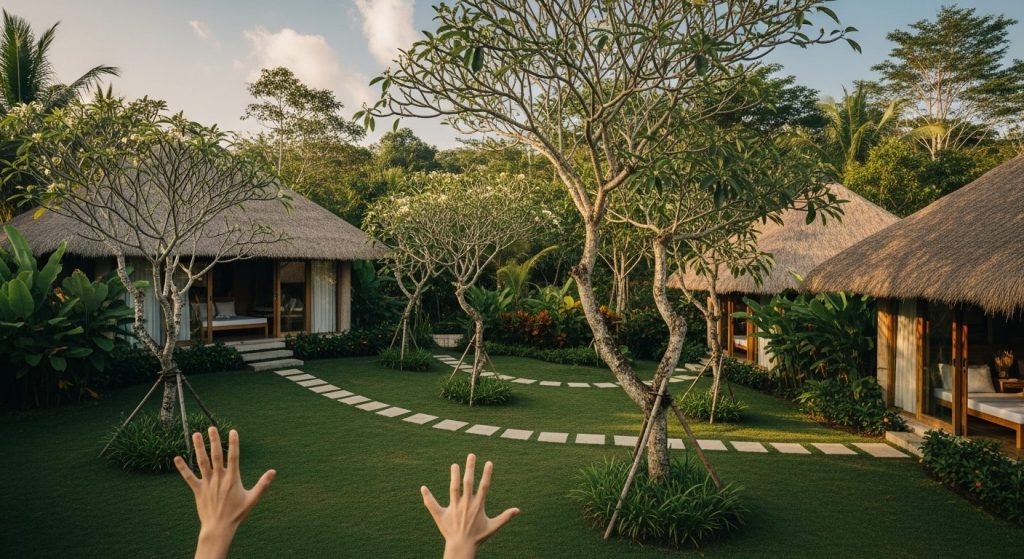
An organic farm stay in Bali is an overnight accommodation set on, or directly tied to, a working farm that grows food without synthetic pesticides or fertilisers and invites guests into the daily rhythm of that land. A true one earns the name through farming practice and guest access, not through a thatched roof and a rice-field view. That distinction matters because “rustic,” “natural,” and even “organic” are marketing words in Bali long before they are agricultural ones, and the gap between the two is exactly what this guide is here to close.
I’m Verda Bali Editorial Desk, and I edit the community-tourism and eco-travel desk at Verda Bali. My work is village immersion, organic farm stays, and how a trip can leave more money and dignity with the hosts who actually grow the food. A note before we go further: everything here is information, not licensed agricultural, legal, or safety advice. We curate and route enquiries to vetted local farm and permaculture operators on a referral basis. No one can pay to change what we publish; if you proceed with a partner they may pay us a referral fee at no extra cost to you.
What separates a real regenerative farm stay from greenwashed “rustic” branding
Start with one question. Does the place farm, or does it just sit near farms? A photogenic villa beside someone else’s rice paddy is a villa with a view. A farm stay puts you inside the system: compost piles, seed-saving, a kitchen that cooks what was picked that morning, hosts who can name the crop rotation because they live by it.
Regenerative goes a step past organic. Organic is mostly about what is left out — no synthetic chemicals. Regenerative is about what is built up: soil carbon, biodiversity, water retention, the health of the land improving season over season rather than merely holding steady. Permaculture is a design philosophy you’ll see used to reach that goal, arranging water, plants, animals, and human habits into one self-reinforcing loop.
Honest red flags to test before you book
- “Organic” with nothing behind it. Ask what they grow, where the rest of the kitchen’s food comes from, and whether you can walk the growing area. Vague answers are an answer.
- A view, not a system. If there’s no compost, no nursery, no working plot you can actually visit, you’re paying for scenery.
- Certification language used loosely. A property may say “eco” or “sustainable” without holding any third-party certification. Some Bali properties do hold formal standards — Green Globe, GSTC recognition, Green Key, EarthCheck, the local Eco Climate Badge — but those apply to the resort sector and should be checked against the certifier, not taken from a brochure.
- Imported abundance dressed as local. Farm-to-table is honest only when the farm is real and close. Out-of-season everything, flown in, undercuts the whole point.
None of this requires suspicion of every host. Most Bali farm hosts are sincere. The point is to give your money to the ones doing the real work, and a few specific questions sort that out fast.
Where to find organic farm stays and permaculture retreats in Bali
Bali’s farming character changes sharply with altitude and region. Four areas carry most of the genuine organic and permaculture activity, and each suits a different kind of traveller.
Ubud and its surrounding villages
Ubud is the cultural and agricultural heart of the island, ringed by rice terraces and smaller farming villages. It’s the easiest base for a first farm-immersion trip: short drives, a deep bench of permaculture gardens and learning hubs, and plenty of refined places to retreat to afterward. The Ubud area is also where Bali’s bamboo-architecture eco movement is most visible. Bambu Indah is a luxury eco-friendly resort here built around innovative bamboo design and nature-immersive living, and Green Village Bali nearby is a bamboo-architecture community widely held up as an example of eco-design. Green School Bali, also in the Ubud area, runs visits and tours for travellers curious about its sustainability-led learning model — a useful half-day if you’re travelling with older children.
Sidemen, east Bali
Sidemen is quieter, greener, and noticeably less touristed than Ubud, with terraced valleys under the shadow of Mount Agung. This is the area for travellers who want working-farm calm over convenience. Drives in and around the valley take longer and roads are narrower, so factor extra transfer time, especially with elders or small children.
Munduk and the Bedugul highlands
Up in the central highlands the climate cools and the crops change — this is coffee, cacao, clove, and vegetable country, with waterfalls and cloud forest between the plots. Munduk and the Bedugul area suit the traveller chasing coffee and chocolate farm experiences and a genuine highland chill. Mornings are cold by Bali standards; pack a layer. Transfers from the south coast are long, so the highlands reward a multi-night stay rather than a day trip.
Tabanan and the western rice belt
Tabanan is Bali’s rice bowl, home to some of the island’s most expansive terraced landscapes and a growing cluster of design-led eco properties. Ulaman Eco Luxury Retreat sits in Tabanan and is featured across travel media as a sustainability-focused property. It’s a strong region for pairing serious agricultural scenery with elevated comfort.
Comparing Bali’s farm-stay regions at a glance
Use this to match a region to your trip. Travel times are general guides from the south-coast airport area and vary with traffic and exact location; confirm specifics with your host. Last verified June 2026.
| Region | Farm character | Best for | Practical note |
|---|---|---|---|
| Ubud & villages | Rice terraces, permaculture gardens, bamboo eco-design, learning hubs | First-timers, families, easy access | Shortest transfers; busiest of the four |
| Sidemen (east) | Terraced valleys, working farms, Mount Agung backdrop | Quiet immersion, couples | Narrow roads; longer local drives |
| Munduk / Bedugul (highlands) | Coffee, cacao, clove, highland vegetables, cloud forest | Coffee & chocolate farm stays, cool climate | Cold mornings; long transfer from south |
| Tabanan (west) | Expansive rice terraces, design-led eco retreats | Scenery plus refined comfort | Spread-out sights; a car helps |
Coffee, cacao, and farm-to-table: what a working-farm day actually looks like
A real farm stay is participatory by default. On a coffee or cacao farm in the highlands, a morning might mean walking the rows, picking ripe cherries or pods, then following the processing — drying, roasting, grinding, or in cacao’s case fermenting and conching — through to a cup or a bar you taste at the source. The value isn’t the souvenir bag. It’s understanding why single-origin tastes the way it does and what a farmer earns for the work behind it.
Farm-to-table on a genuine organic stay means the kitchen is downstream of the garden. You eat what was harvested that day, prepared simply, with the menu bending to the season rather than the other way around. If you have dietary needs, raise them early; small working kitchens are flexible but not infinitely stocked.
Rice fields as cultural experience, not just backdrop
Bali’s rice terraces are shaped by subak, the centuries-old cooperative irrigation system that shares water democratically among farmers — a living institution, not a photo prop. A good rice-field cultural tour walks you through how the water is shared, how the planting calendar works, and how a single terrace ties dozens of households together. That context is the difference between watching agriculture and understanding it.
Who farm stays suit — and who should think twice
Conscious couples tend to love the slowness and the proximity to real work; pair a farm valley like Sidemen with a few coastal nights so you’re not constantly in transit. Families do well in the Ubud area, where transfers are short and a Green School visit or a hands-on harvest keeps children engaged — just check terrain, pool access, and steepness with the host first. Wellness and solo travellers often want structure they can opt into rather than a locked schedule; ask about daily rhythm and typical guest mix before committing.
Think twice if “off-grid” needs to mean step-free, fully air-conditioned, and five minutes from a pharmacy. Working farms can be remote, warm, and uneven underfoot. That’s the trade-off that makes them real, and it’s worth naming honestly rather than discovering on arrival. For any health, mobility, or safety concern, confirm details directly with the operator and consult the appropriate professional — we share information, not licensed advice.
How Verda Bali vets and routes farm-stay enquiries
When we shortlist a farm stay or permaculture retreat, we’re looking at the same things I’d tell you to look at: a genuine working growing area, hosts who can speak to their own practices, a transparent picture of how the place treats its land and its people, and comfort that fits an eco-luxury traveller without pretending to be something it isn’t. We label our internal checks as editorial criteria, not certification — they are our judgement, not a third-party standard or compliance proof.
If you’d like a hand matching a region and a style of stay to your trip, plan your eco-luxury Bali trip with us and we’ll send a small, considered set of options rather than a long list. You can also reach the desk over WhatsApp if you’d prefer to talk it through — share your dates, who’s travelling, and how rustic-versus-refined you’re aiming for, and we’ll take it from there. There’s no obligation, and you book direct with the host or operator.
A word on independence, because conscious travellers rightly ask: no one can pay to change what we publish; if you proceed with a partner they may pay us a referral fee at no extra cost to you. That’s what keeps these guides free, and it’s why the red flags above stay in even when they’re inconvenient.
Frequently asked questions
What is the difference between an organic farm stay and a regenerative farm stay in Bali?
An organic farm stay grows food without synthetic pesticides or fertilisers — defined by what it leaves out. A regenerative farm stay goes further, actively rebuilding soil health, biodiversity, and water retention so the land improves over time. Permaculture is the design approach many Bali hosts use to reach that regenerative goal. Ask hosts to describe their actual practices; the answer tells you which you’re looking at.
Which part of Bali is best for an organic farm stay?
The Ubud area is the easiest start, with short transfers, permaculture gardens, bamboo eco-design, and learning hubs like Green School. Sidemen in the east offers quieter working-farm valleys. Munduk and the Bedugul highlands suit coffee and cacao farm experiences in a cool climate, and Tabanan in the west pairs rice-terrace scenery with design-led eco retreats. Match the region to how much travel time and remoteness you’re comfortable with.
Are Bali farm stays suitable for families with children?
Many are, especially around Ubud where drives are short and a Green School visit or a hands-on harvest keeps children involved. Confirm terrain, steps, pool access, and drive times directly with the host before booking, since working farms can be uneven or remote. We share information, not licensed safety advice, so check anything critical with the operator and the relevant professionals.
How can I tell if a Bali eco or farm stay is greenwashing?
Ask what they grow, where the rest of the kitchen’s food comes from, and whether you can walk the growing area. Look for a real system — compost, a nursery, a working plot — rather than just a rice-field view. Treat loose “eco” and “sustainable” language with caution, and where a property claims formal certification such as Green Globe, GSTC, Green Key, EarthCheck, or the local Eco Climate Badge, verify it with the certifier rather than the brochure. Last verified June 2026.
Does Verda Bali charge me to recommend a farm stay?
No. Our guides are free and our recommendations are editorially driven, not pay-to-list. No one can pay to change what we publish; if you proceed with a partner they may pay us a referral fee at no extra cost to you. You book direct with the host or operator.
Ready to turn this into a real itinerary? Plan your eco-luxury Bali trip and we’ll match a farm region and stay to how you like to travel — or message the desk on WhatsApp with your dates and we’ll reply with a short, honest shortlist.